Vilnius, Lithuania – In a complex intelligence operation that lasted a full year, Lithuania announced the arrest of nine people belonging to an international sabotage network. It accuses the Russian military intelligence agency (GRU) of orchestrating plots aimed at carrying out assassinations, arson, and acts of sabotage across Europe.
The “AirTag” device reveals the hidden
The case began last spring when Russian opposition figure and human rights activist Ruslan Dzhabasov, who had sought asylum in Lithuania in 2021, discovered an Apple AirTag tracking device carefully concealed under the hood of his car.
This seemingly innocuous discovery led Lithuanian police to launch a wide-ranging investigation. Dzhabasov was used as bait in a cat-and-mouse game of intelligence operations. Ultimately, the operation resulted in the network being dismantled before it could carry out its deadly plans.
The investigation revealed that the arrested group, comprised of individuals of various nationalities from Greece, Ukraine, Russia, Georgia, and the Baltic states, was already involved in monitoring military installations in Greece. They also burned military equipment in Bulgaria that was en route to support the Ukrainian front.
The decisive moments in front of Gabasov’s house
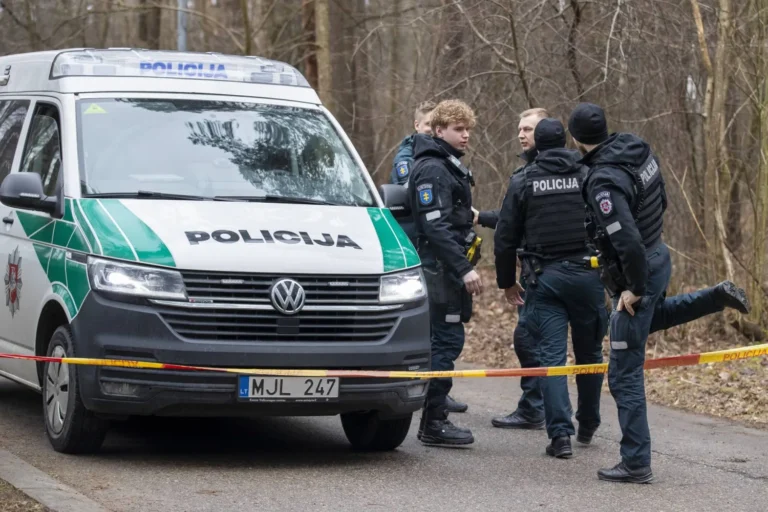
Lithuanian police have revealed dramatic details of the arrest. A man in his fifties, holding both Greek and Russian citizenship, was apprehended while lurking, armed with a pistol, outside the home of Gabasov, where his family resides. Meanwhile, Gabasov was receiving a frantic call from the police while at a McDonald’s restaurant. They told him, “You have no idea how dangerous you are.”
In a statement to the New York Times, Jabasov said: “I knew I was a target, but I didn’t expect it to come to the point of attempted murder in broad daylight.”
Strategic escalation: From sabotage to “death parcels”
European security officials believe this network is just one part of a broader Russian strategy aimed at carrying out “hybrid criminal acts.”
This campaign has included bombing railway lines in Poland and setting fire to warehouses in Britain and Spain. Most alarmingly, it has involved planting incendiary devices inside DHL shipping packages, which were designed to explode on cargo planes.
Saulius Preginas, deputy head of the Lithuanian Criminal Police Office, confirmed that investigations have established direct links between the perpetrators and officers in the Russian General Staff.
While Moscow continues to categorically deny these accusations, the Baltic states, Germany, and Poland insist that the use of “agents” recruited online with financial promises has become Moscow’s primary weapon in its undeclared war against European capitals opposed to Kremlin policies.